Sustainable Healthcare Fund Art. 9 compliant

As an SFDR Article 9 fund aligned with GRESB standards, the MoZaïC Sustainable Healthcare Fund (MSHF) delivers a 100% sustainable investment strategy.
We combine forward-looking environmental performance with high-quality care to accelerate the transition of pan-European healthcare real estate toward a net-zero and socially inclusive future.

Sustainable Investing in EU Healthcare Real Estate

In accordance with SFDR Article 10, MSHF transparently discloses its sustainability governance and performance tracking, reflecting its strict SFDR Article 9 core classification and French ISR Label commitments.

Our Mission
Transforming Healthcare Infrastructure

Changing demographics are creating severe medical, economic, and social challenges, compounding environmental pressures that stress supporting infrastructure. As our population rapidly grows older and sicker with less traditional support, the proactive development of superior, sustainable healthcare facilities becomes an absolute necessity.

The MoZaïC Sustainable Healthcare Fund (MSHF)—a closed-end real-estate fund entirely dedicated to sustainable investment—seeks to make a positive Pan-European impact. We actively manage standing investments and spearhead new construction and major renovations across France and Spain. Our mission is to accelerate the transition toward a sustainable economy by creating, redeveloping, and acquiring future-oriented healthcare real estate that services the sick and elderly at all levels of dependence, ensuring high-quality care, robust environmental performance, and deep community integration.

SFDR Article 9 & GRESB Alignment Disclosures

The MoZaïC Sustainable Healthcare Fund (MSHF) utilizes an internal data-driven framework to baseline and monitor the sustainability performance of its infrastructure investments across the healthcare sector and varying European geographies.
To ensure that 100% of these investments contribute to its core goals without significantly undermining any other environmental or social objective defined by Article 2(17) of the SFDR, the Management Company conducts a comprehensive sustainability assessment of each asset before acquisition and throughout its lifecycle.

Our Commitments

Benchmark
17 Sustainable Development Goals (SDGs)
Committed to furthering the United Nations Sustainable Development Goals
Good Health and Well Being
Focus on improving the Health and dignified lives of the increasingly vulnerable population.
Focus on shifting and/or changing resource use of existing facilities andcreating new facilities towards cleaner energy.
Focus on creating and
enhancing inclusive and
sustainable urbanization
capacity for the
changing demography.
Innovative Infrastructure
Focus on retrofitting older health care
facilities to exceed current industry standards

Sustainable Investment
Objective of the Financial Product

The MoZaïC Sustainable Healthcare Fund (MSHF) is systematically structured to pursue a definitive sustainable investment objective, documenting a 100% mandatory allocation toward sustainable pan-European real estate assets.
The fund targets financial returns; it formalises and records its dual mandate to generate measurable environmental and social impacts. This commitment is strictly maintained through a binding investment strategy embedded within the product's legal framework

Our stakeholders as part
of the decision process

While the fund’s investment strategy focuses strictly on physical real estate infrastructure rather than acquiring equity stakes in listed corporate companies, robust governance practices are deeply embedded across our operational and stakeholder ecosystems. MoZaïC Asset Management has operationalized a comprehensive governance framework that prioritizes active stakeholder consultation and institutional accountability to drive our sustainable investment objectives.
To secure long-term alignment, the Management Company has formalised its Stakeholder Engagement Policy, mapping out and implementing tailored engagement actions for each "key" stakeholder group—defined as those directly impacted by or essential to achieving the fund's sustainability goals.

This framework is structured around two operational pillars:

Accessible Grievance & Complaints Mechanism: MSHF operates a structured process for handling stakeholder complaints, ensuring a transparent channel that is fully accessible to facility workers, tenants, and local host-country community members. Any submitted grievance automatically alerts the Risk Committee and ESG Manager, guaranteeing an initial response within 24 hours and a mitigation action plan within 15 days to effectively manage operational and reputational risks.

Active Stakeholder Input in Decision-Making: Stakeholder feedback is systematically integrated into portfolio operations through a structured Tenant Engagement and Quality of Care Program.
By conducting annual Quality & Care assessments, bi-annual committee reviews, and automated satisfaction surveys, evolving tenant and community needs directly steer our long-term asset-level CAPEX planning and transition pathways.

Our commitments
and investment strategy

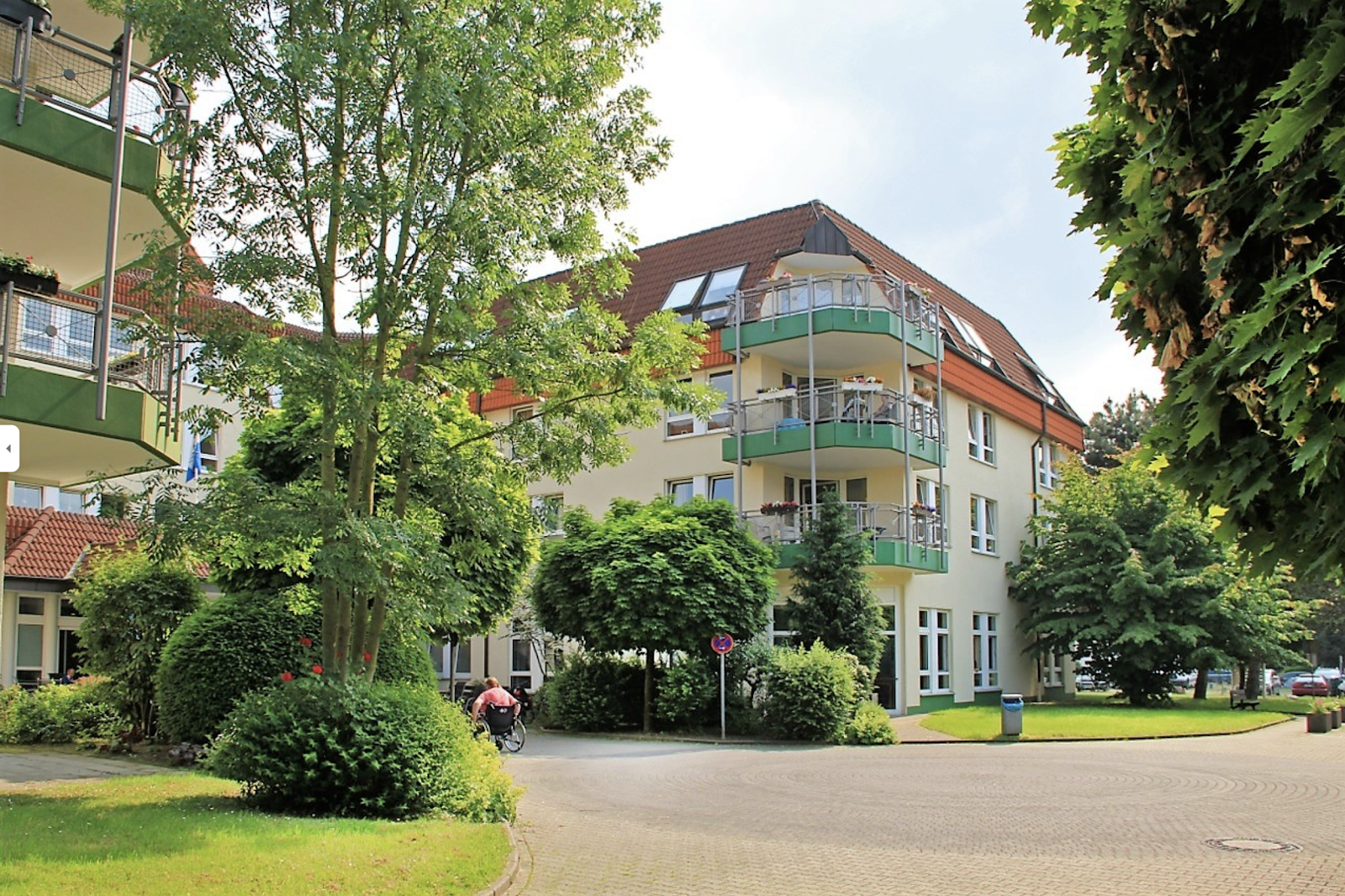
The Fund’s mission is centred around the creation, renewal and acquisition of sustainable healthcare and senior living real estate across Europe that caters to all levels of dependency and provides an impact in its community.
MoZaiC Asset Management works as Investment Advisor for the Fund with the supervision of Lemanik Asset Management.

54

Criterias in our assessment grid for the ESG performance of buildings with a focus on Quality and Care

40 %

Our objective of reduction Carbon Intensity scope 3  calculated at the portfolio level during ownership

100 %

Green Building Certification of the assets above the level "Very Good" of the BREEAM Assessment

60 %

Affordable housing for elderly in need in a specific catchment area calculated on portfolio level

100 %

The ratio of the assets where Green Spaces are protected and Biodiversity is promoted

Proportion of Investments

The MoZaïC Sustainable Healthcare Fund (MSHF) enforces a binding investment strategy that mandates a 100% allocation of its capital strictly toward sustainable real estate assets.
As part of our additional, complementary commitments to our investors that extend beyond the baseline SFDR Article 9 criteria, MSHF has developed a rigorous internal assessment framework to systematically identify and vet infrastructure assets that contribute positively through their operational services or structural practices to key environmental and social themes.

, more responsive set of environmental and social themes than those currently formalisThis data-driven approach defines a comprehensive set of quantitative and qualitative criteria to evaluate the precise sustainability contribution of each asset. Crucially, our internal scoring methodology encompasses a broader and more responsive scope of environmental and social themes than those currently formalized by the EU Taxonomy regulations alone, ensuring that our pan-European healthcare portfolio captures cutting-edge transition opportunities and drives holistic value across both the E and S pillars of ESG.

Monitoring of Sustainable
Investment Objective

MoZaïC Sustainable Healthcare Fund (MSHF) deploys a rigorous and continuous governance framework to track the attainment of its sustainability targets. The monitoring systematically includes a formal review of all relevant residual environmental and social risks originating from asset characteristics, tenant operations, and ongoing property practices. This ongoing surveillance acts as an operational feedback loop, allowing the Management Company to accurately measure and verify the efficiency of its mitigation and capital expenditure (CAPEX) strategies.

To maintain absolute institutional alignment, this evaluation is executed and updated on an annual timeline, structured around two core compliance pillars:

  • Sustainable Activity Framework: Property-level performance indicators—including energy efficiency, water conservation, and carbon intensity metrics—are monitored annually using automated ESG dashboards to cross-reference real-time progress against our science-based trajectories and certified SRI methodologies.
  • DNSH Principle Integration: The annual update systematically reviews and measures asset compliance against the "Do No Significant Harm" (DNSH) principle. By monitoring mandatory Principal Adverse Impact (PAI) indicators alongside forward-looking physical climate assessments, the fund ensures that no operational or environmental risks undermine the broader social and ecological objectives of the portfolio


How are the environmental or social characteristics and the sustainability indicators monitored throughout the lifecycle of the financial product and the related internal/external control mechanisms?

The sustainable investment objective of the MoZaïC Sustainable Healthcare Fund (MSHF) is continuously monitored through a strict, dual-layered internal governance structure that tracks sustainability indicators and assesses residual risks throughout the lifecycle of each asset.

Continuous Internal Governance & Risk Screening.

  • The ESG Sustainability Team: Continuously monitors the portfolio to ensure that every asset and tenant meets our strict sustainable investment criteria. This includes analysing the degree of asset exposure to activities deemed damaging to the environment or society, and screening for ongoing environmental or social controversies.
  • The Risk Management Team: Monitors and secures compliance with the minimum commitments and binding elements of the asset base.
  • Annual Review & Action Plans: The fund hosts recurring annual meetings dedicated to risk rating and performance evaluation. These sessions measure gaps, review ESG assessments for assets below or above minimum ratings, and adapt localised action plans and improvement budgets accordingly.
  • External Control & Institutional Reporting: to ensure absolute institutional accountability, MSHF operates under a robust external oversight ecosystem under the control of its AIFM (Fundsight SA - Lux), since December 31, 2022, issues an official, transparent report detailing the fund's objectives and actual achievements regarding environmental and social issues.
  • EU Taxonomy Alignment Disclosure
Access LP Portal & Detailed Dashboard
Detailed financial performance and asset-level dashboards are strictly reserved for MSHF LPs.
Private Space

Methodologies used to measure the attainment of the objective

The attainment of the sustainable investment objective of the financial product is measured by 4 sustainability indicators

SFDR Sustainability indicators

The % of assets with an EPC rating C+
The fund level energy  consumption (e.g., kWhEp. sqm.y or kWhEf.sqm.y) of the portfolio
Percentage of affordable housing units or placesin retirement homes for Dependent elderly individuals in need
Percentage of social housing units or beds within the portfolio

Data Sources, Processing and Limitations

To ensure the accuracy and reliability of our sustainability tracking, the MoZaïC Sustainable Healthcare Fund (MSHF) relies on a structured data aggregation framework that combines direct operational insights with recognised third-party institutional benchmarks.

Our data collection and processing methodology is built upon three core channels:

Primary Tenant Disclosures & Direct Engagement: ESG assessments are primarily anchored in the internal review of official sustainability documents published directly by our tenants. The MSHF Sustainability team supplements this documentation with ongoing, direct exchanges with tenant representatives to secure real-time operational metrics and verify data integrity.

Institutional Benchmarks & Expert Networks: To contextualise and validate our portfolio's performance, MSHF systematically leverages specialised external data sources and rating agencies. This includes global sustainability benchmarks such as GRESB, technical data from the OID (Observatoire de l'Immobilier Durable), independent expert audits, sell-side research, and verified news databases on controversies.

In-House Qualitative Analysis: Raw data and qualitative insights are processed internally by the dedicated members of the MSHF Sustainability team. This specialized in-house analysis ensures that data is accurately translated into actionable asset-level transition roadmaps and aligned with our strict SFDR Article 9 criteria.

Sustainability indicators

Data sources

Targets

How data are processed

Proportion of data estimated

The average EPC level for the entire portfolio
        Certificate of Energy                Performance
Approve Energy Performance Certificate rating or equivalent
Appropriate  Energy Assessor at DD & Exit
No estimated data
The fund level energy  consumption (e.g. kWhPE/m² or kWhFE/m²) for all fluids, all uses, common and private areas
Bills / Meters
Reduce energy
consumption at
portfolio level

Monitor Energy consumption : KwhEf.sqm.y     
No estimated data
The share of non-vegetated surface area compared to the total surface area of the plots of all assets
Visit, technical document or google map
Maintain it between
80% and 120%    

Evaluate the non-vegetated area rate (%) TNFD 3|30|300
    
No estimated data
The rate of environmental certification BREEAM
BREEAM certificate
Obtain the level
"Very Good"
for all assets

Certification by the BRE
No estimated data

Due Diligence

To guarantee that our sustainable investment objectives are embedded from day one, MSHF applies a strict, systematic due diligence process to 100% of its real estate acquisitions.
This pre-investment framework is engineered to assess both potential impact and structural risks before any capital is deployed.
Illustration of the type of program within MoZaiC Asset Management

Engagement policies

MoZaïC Asset Management has formalised and deployed a comprehensive stakeholder engagement policy designed to ensure that our entire ecosystem is actively aligned with the fund's long-term sustainability pathways.

1. Strategic Stakeholder Mapping
To maximize the impact of our initiatives, the Management Company has systematically identified its "key" stakeholders—specifically mapping the individuals, operators, and partners who are both directly concerned by our healthcare infrastructure and possess a direct operational impact on achieving the fund’s sustainable investment objective.

2. Targeted Operational Actions
Customised engagement protocols and measurable action plans have been defined and rigorously implemented for each key stakeholder group:
Tenants & Operators: Establishing ongoing dialogue, conducting annual ESG quality reviews, and providing technical support to co-manage utility data collection and phase out fossil fuels.
Institutional Investors (LPs): Providing absolute transparency through public extra-financial reporting alongside confidential, granular asset-level performance tracking via the private LP portal.
Technical Partners & Experts: Collaborating closely with local engineering and carbon experts to design, budget, and execute localised climate transition CAPEX programs, linked to the BREEAM engagement.


Is engagement part of the sustainable investment objective?
Yes

If so, what are the engagement policies? (Including any management procedures applicable to sustainability-related controversies in invested companies)

Engagement activity forms an integral part of MSHF’s responsible investment approach. The Management Company has established a tailored, proactive engagement strategy for each stakeholder type, identifying material issues and deploying specific interaction mechanisms to structurally improve asset and tenant practices across all ESG vectors.

1. Individual Engagement (One-on-One Dialogue) twice a year in each asset
MSHF’s ESG analysts interact one-on-one with tenant representatives to actively encourage the continuous improvement of their day-to-day sustainability practices. The core purpose of this individual engagement is twofold:
Best Practice Promotion: To instil advanced ESG frameworks into the operational model of our healthcare facilities.
Sector-Wide Solutions: To foster the development of pragmatic, scalable solutions addressing the major environmental and social challenges inherent to the healthcare real estate sector.

2. Collaborative Engagement (Market Standards & Controversy Management)
On a broader scale, MSHF joins forces with other institutional investors and representatives of civil society to drive systemic change:
Controversy Management: Collaborative frameworks are actively used to identify controversial practices, encourage greater transparency, and , where necessary, demand that companies adapt or remediate their operations.
Standard-Setting Compliance: MSHF engages collectively to share its vision of sustainable finance, improve regulations across the financial sector, and foster sustainable investment. We are strictly committed to promoting forward-thinking regulations, legislative improvements, institutional standards (GRESB), or state-backed labels (ISR), creating long-term value.

Leadership

Corporate Governance & Team

Experience in real estate, ESG, and institutional capital

Frederic DIB
General Partner

Twenty years sourcing and developing social infrastructure across Europe

Stephane HEDONT
ESG director

GRESB AP, CFA, with deep expertise in sustainability certification & care standards

Tamara VALENCIA OLMOS
Fund Manager

Manages asset performance and operator relationships across portfolio

Herun WANG
Asset and Sustainability Manager

Ensures ISR Label adherence and UN PRI Signatory obligations throughout operations

Peter BETYO
Asset Manager FR - ESG Compliance

Evaluates compliance and BREEAM certification pathways for assets

Angie ONATE
Financial Analyst

Tracks environmental and social indicators at fund and asset levels

Alaa EL BINANI
Financial Analyst

Coordinates with operators to maintain standards and deliver resilient value

Ekaterina QUENELLE
Investor Relations Director

Manages LP communications and provides access to reports and documentation

Aude LEFAY
Office Manager

Manages Human Resources Needs in compliance with the DEI Code of Conduct.

Juliette SAGET
Data Analyst

Aggregates and consolidates asset-level environmental and social metrics to secure data integrity and seamless compliance.

Hamsan NASR
Data Scientist

Develops advanced models and custom scoring indexes, to drive data-backed investment decisions

We're growing

Join a team building sustainable healthcare real estate

Verified

Regulatory alignment matters

SFDR Article 9, EU Taxonomy, TCFD, TNFD, SRI compliance

FAQ

Answers to institutional investor and regulatory auditor questions

What is Article 9 classification?

SFDR Article 9 designates funds with sustainable investment objectives and binding commitments to environmental or social characteristics. MoZaïC MSH meets this standard through explicit 40% decarbonization targets, 100% BREEAM certification requirements, and independent third-party verification of all ESG metrics.

How is the 40% reduction calculated?

Energy and GHG intensity reductions are measured against a harmonized 2022 baseline across all standing assets. CRREM modelling establishes the decarbonization pathway while asset-level reviews identify specific retrofit opportunities. Progress is tracked annually and independently audited.

What is BREEAM certification?

BREEAM is the world's leading sustainability assessment method for buildings. MoZaïC commits to 'Very Good' or higher certification across 100% of portfolio assets by 2031. This covers energy efficiency, water management, waste reduction, and operational sustainability.

How are assets independently verified?

S&P Global Limited conducts Type 2 Moderate Assurance audits of all environmental KPIs under the AA1000 Assurance Standard v3 (2020). This ensures data integrity and regulatory compliance for institutional investors and auditors.

What is the three-phase roadmap?

Phase 1 (2024) establishes digital energy monitoring across all assets. Phase 2 (2025) deploys centralized HVAC retrofits and insulation improvements targeting the 40% milestone. Phase 3 (2026) completes deep retrofits and on-site solar deployment.